Break Punk: A Display Font with Unapologetic Attitude
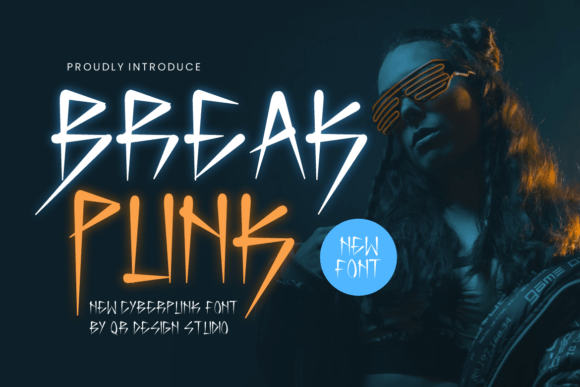
Every now and then, a typeface lands on your screen that doesn't just sit there—it makes an entrance. Break Punk is that kind of font. It's bold, it's unapologetic, and it carries an energy that immediately injects personality into any project. If you've been scrolling through endless font libraries looking for something that actually feels alive, something that refuses to blend into the background, this creative font might be exactly what your next design has been waiting for.
What Makes This Typeface Stand Out in a Crowded Market
Break Punk isn't trying to be everything to everyone, and that's precisely its strength. It's a display font built for moments when you need text to command attention rather than whisper politely. The letterforms carry a rebellious edge—think sharp angles, unexpected curves, and a rhythm that feels almost musical. There's a rawness here that doesn't sacrifice legibility, which is a balance many fonts in this category struggle to achieve.
What really sets it apart is its versatility within its own lane. Some display fonts lock you into a single mood. Break Punk can feel edgy and underground one moment, then surprisingly refined the next, depending on how you deploy it. That adaptability makes it a genuinely useful design asset rather than a novelty you use once and archive.
Where This Font Actually Works in Real Projects
Let's talk practical applications, because a font is only as valuable as the projects it elevates. Break Punk shines brightest in contexts where you want your typography to carry emotional weight. Here's where it tends to make the biggest impact:
- Logo design and brand identity — If your brand personality skews toward bold, unconventional, or youthful, this typeface can anchor a visual identity that people actually remember. It works particularly well for streetwear brands, music labels, independent breweries, skate shops, and creative agencies that want to signal they don't follow the rules.
- Packaging design — On shelf or in a product photo, packaging needs to pop in seconds. Break Punk grabs eyes fast, making it ideal for product names, taglines, or hero text on boxes, bottles, and bags. Pair it with clean sans serif font styles for body copy and you've got a balanced, professional presentation.
- Social media graphics — Instagram posts, YouTube thumbnails, TikTok overlays—these platforms are visual battlegrounds. A strong display typeface like this one helps your content cut through the noise. It photographs well and reads clearly even at smaller sizes, which matters when someone's thumb is flying past your content in a feed.
- Poster and event design — Concert posters, festival flyers, gallery announcements, pop-up shop promotions. Break Punk was practically made for this kind of work. It brings the energy these projects demand without needing a dozen other design elements to prop it up.
- Merchandise and apparel — T-shirts, hats, tote bags, stickers. When text becomes the design itself, the font carries enormous responsibility. This typeface holds up beautifully in print and embroidery contexts.
- Websites and blogs — Used sparingly for headings and hero sections, it can give a site real character. The key is restraint—let it do the heavy lifting on headlines while relying on a more neutral serif font or sans serif font for body text.
- Digital products and editorial layouts — E-books, magazine covers, newsletter headers, course materials. Anywhere you need a title or chapter heading to feel important and distinctive.
Making Typography Work Harder for Your Brand
Here's something a lot of small business owners and content creators underestimate: consistent typography builds recognition faster than almost any other design element. Think about the brands you recognize instantly—it's often the type doing the heavy lifting. Choosing a distinctive premium font like Break Punk and using it consistently across your touchpoints creates a visual thread that ties everything together.
That said, consistency doesn't mean using one font everywhere for everything. It means establishing a typographic system. A smart approach might look like this:
- Select your hero font. This is Break Punk—used for headlines, logos, and moments of emphasis where personality matters most.
- Choose a complementary body font. A clean, highly readable typeface for paragraphs, descriptions, and longer text blocks. A simple sans serif or a classic serif font with good x-height works well here.
- Define your hierarchy. Decide which font handles which job. Headlines, subheadings, body copy, captions, buttons—each has a role, and clear rules keep your designs looking intentional rather than chaotic.
- Test your pairings. Before committing, lay out a sample design with both fonts working together. Check how they interact at different sizes and in different contexts. A pairing that looks great at 72pt on a poster might feel unbalanced at 16pt on a website.
Readability Isn't Optional—It's the Foundation
One honest caveat worth mentioning: display fonts demand more thought around readability than their more conservative cousins. Break Punk is well-crafted and legible for its category, but context still matters enormously. Using it for a 200-word paragraph at 11pt on a website would be a mistake—not because the font is flawed, but because that's simply not what display typography is designed to do.
Reserve it for short, high-impact text. Headlines, titles, callouts, logos, single-word statements. When used within its strengths, it enhances readability by creating clear visual hierarchy—readers immediately know where to look first. That's not just good design; it's good communication.
Also consider your medium. Screen rendering and print output behave differently. If you're designing primarily for digital, test the font across devices and browsers. If print is your focus, get a proof before a full run. These small steps prevent headaches and ensure the bold personality you chose translates exactly as intended.
Licensing and the Business Side of Font Selection
If you're using Break Punk for client work, merchandise, or any commercial application—and you almost certainly are—make sure you understand the licensing terms. A commercial font license typically covers specific use cases: desktop installation, web embedding, app integration, and merchandise production each sometimes require different permissions.
This isn't bureaucratic red tape. It protects both you and the font creator. Purchasing proper licensing means you can use the typeface confidently in paid projects without worrying about legal complications down the road. Most font licenses are surprisingly affordable relative to the value they deliver, especially when you consider how many projects a single typeface can serve over its lifetime.
Bringing It All Together
Finding a font that balances personality with practicality is harder than it sounds. Too much flair and it becomes illegible. Too little and it disappears into the sea of default options everyone else is already using. Break Punk threads that needle with confidence. It's a creative font with real substance behind its style—equally at home on a concert poster, a product label, a social media campaign, or a brand identity system.
The best way to know if it's right for your next project? Download it, set your headline in it, and see how it feels. Sometimes you just know. And when a typeface makes you feel something the moment you start typesetting, that's usually a sign you've found something worth keeping in your toolkit for a long time.