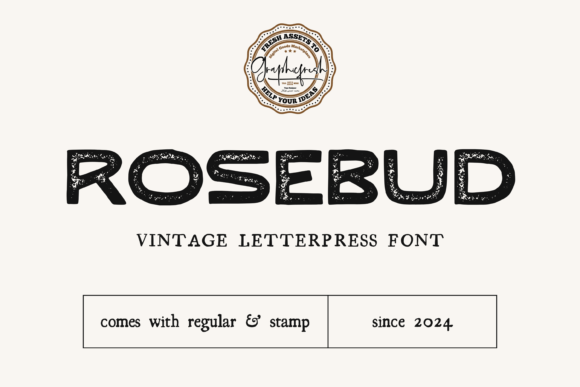
Rosebud: The Vintage Font That Feels Like a Handwritten Letter
There’s something deeply comforting about objects that carry a sense of history—a weathered sign, an old postcard, a favorite book with creased pages. In design, that feeling of warmth and authenticity can be hard to capture, especially when working with digital tools. That’s where a typeface like Rosebud enters the picture. It’s not just a collection of letters; it’s a carefully crafted display font designed to evoke nostalgia, texture, and a timeless charm that feels both personal and polished.
More Than Just a Font: Understanding Rosebud's Personality
Rosebud is a premium font that stands out because of its unique visual character. Each glyph features subtle, hand-crafted textures that mimic the appearance of ink on paper, giving it a slightly worn, organic quality. Unlike clean, geometric sans serif fonts or overly formal serifs, Rosebud strikes a balance between elegance and approachability. It’s a display font, meaning it’s designed to be used at larger sizes for headlines, logos, and titles where its intricate details can truly shine. The letterforms have a classic, retro elegance that avoids feeling dated, instead offering a versatile foundation for projects that need a touch of warmth and authenticity.
What makes it particularly useful for designers and creators is its ability to add instant personality. A simple word set in Rosebud can tell a story before a single sentence is read. It suggests craftsmanship, care, and a connection to the past, making it an invaluable asset for anyone building a brand or creating visual content that needs to resonate on an emotional level.
Where Rosebud Truly Comes to Life: Practical Applications
The real test of any creative font is how it performs in the wild. Rosebud’s textured, vintage style lends itself beautifully to a wide range of projects, both digital and physical. Think about where you want to make an impression:
- Branding & Logo Design: For businesses that want to convey heritage, artisanal quality, or a cozy, welcoming vibe, Rosebud can form the cornerstone of a memorable brand identity. Imagine it on a coffee shop’s logo, a boutique clothing label, or a handmade soap company’s packaging.
- Packaging & Merchandise: On product labels, box sleeves, or tote bags, the font’s texture adds a tactile quality that digital screens can’t replicate. It makes physical goods feel more considered and premium.
- Editorial & Print Design: Use it for magazine headlines, book covers, or poster titles where you want to grab attention with a distinct visual voice. It pairs wonderfully with clean body copy to create a dynamic typographic hierarchy.
- Digital Presence: While best used for headlines, Rosebud can elevate a website’s hero section, create striking social media graphics, or make a blog’s title stand out. It helps establish a consistent visual tone across digital platforms.
- Invitations & Cards: From wedding invitations to holiday cards, Rosebud brings a handcrafted, heartfelt feel that mass-produced templates lack.
The key is to use it strategically. Because it’s a display font, it’s not meant for long paragraphs of body text. Its strength lies in capturing the eye and setting a mood, which is exactly what you need for logos, headlines, and impactful call-to-action elements.
Integrating Rosebud into Your Design Workflow
Adopting a new typeface into your toolkit is about more than just liking how it looks. It’s about ensuring it works for your specific goals and integrates smoothly with your other design assets. Here’s some practical advice for making the most of Rosebud:
Pairing for Balance: Rosebud’s detailed, textured style means it pairs best with simpler, cleaner fonts for body text. A classic sans serif font or a highly legible serif font can provide excellent contrast, ensuring your overall design remains readable and professional. The display font handles the personality, while the secondary font handles the information.
Consider Your Medium: Always test how the font renders in its intended environment. A font that looks gorgeous on a printed poster might lose its subtle textures on a small mobile screen. Check its readability at various sizes, especially if you plan to use it for website navigation or smaller subheadings.
Licensing and Versatility: When you invest in a premium font like Rosebud, you’re typically purchasing a commercial license that allows you to use it across multiple projects—from client work to your own business’s marketing materials. This makes it a valuable, long-term asset in your font library. Review the license details to understand the full scope of permitted uses, especially if you plan to use it in digital products for sale.
Explore the Full Family: Many professional typefaces come with multiple styles, such as bold, italic, or alternate characters. Check if Rosebud includes any variations. These can provide additional flexibility within a single project, allowing you to maintain visual consistency while adding emphasis or variety.
The Bigger Picture: Fonts as Tools for Connection
Ultimately, typography is a tool for communication and connection. The fonts you choose do more than display words; they shape perception, evoke emotions, and build recognition. A typeface like Rosebud offers a direct line to feelings of nostalgia, authenticity, and warmth—qualities that can be incredibly powerful for small businesses, creators, and marketers looking to stand out in a crowded digital landscape.
By understanding its character and applying it thoughtfully, you can use Rosebud to create designs that don’t just look good, but feel genuinely engaging. It’s about choosing a font that aligns with your story and using it to tell that story more effectively, one beautifully crafted letter at a time.