Romana: A Font That Brings Whimsy and Character to Your Brand
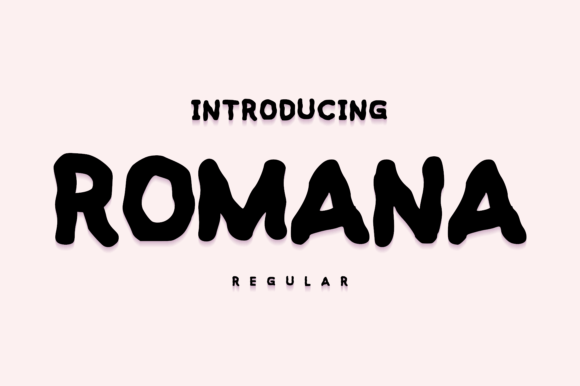
If your designs ever feel a little too stiff, too perfect, or just lacking that spark of personality you know they need, it might be time to shake up your typography. We often get caught up in the clean, geometric precision of modern sans-serifs, but there is a whole world of expression waiting in typefaces that don't follow the straight and narrow. Enter Romana, a lively and wobbly display font that exudes a playful charm. With its irregular lines and quirky shapes, it adds a whimsical touch to any design, injecting a sense of fun and spontaneity that makes every project stand out. It is the kind of typeface that feels like it has a heartbeat, refusing to sit still and demanding attention in the best possible way.
The Psychology of a Quirky Typeface
As designers and entrepreneurs, we spend a lot of time trying to build trust, and usually, that translates to "looking professional." But professional doesn't always have to mean "corporate" or "rigid." In fact, in a crowded marketplace, the brands that win are often the ones that feel human. This is where a font like Romana becomes a powerful tool in your design assets. The "wobbly" aesthetic isn't a mistake; it’s a visual cue that tells your audience you are approachable, creative, and perhaps a little less serious than the competition.
Think about the brands you love that sell artisanal goods, organic products, or creative services. They rarely use stiff, robotic lettering. They use typography that mimics the imperfection of the human hand. Romana fits perfectly into this niche as a premium font that bridges the gap between a structured display font and a loose handwritten font. It suggests authenticity. When a customer sees a logo or packaging designed with this kind of irregular typography, it subconsciously signals that the product inside was made with care, not just mass-produced by a machine. It’s a subtle psychological trick, but one that significantly boosts brand recognition and emotional connection.
Where Does Romana Shine? Real-World Applications
While Romana is a fantastic creative font, it isn’t a "one-size-fits-all" solution for every line of text on your website. You wouldn't want to write a 5,000-word blog post or a legal disclaimer in a wobbly display font—that would be a readability nightmare. However, when used strategically, it becomes a secret weapon for visual hierarchy.
Branding and Logo Design
For logo design, Romana offers instant distinctiveness. If you are launching a coffee shop, a boutique bakery, a children’s clothing line, or a creative agency, this font sets the tone immediately. It tells a story before the customer even reads the name. Pairing the main logotype in Romana with a simple sans serif font for the tagline creates a beautiful balance between "fun" and "functional."
Packaging Design
On the shelf, packaging design is all about the three-second rule. You have a tiny window to grab a shopper's eye. The irregular lines of Romana break the visual pattern of a supermarket shelf. It works exceptionally well for headers on boxes, jar labels, or hang tags for clothing. It gives products a "craft" feel, making them look handmade rather than generic.
Digital Spaces and Social Media
In the fast-scrolling world of social media graphics, standard fonts often get lost. Romana, however, has a texture that stops the thumb. Use it for Instagram quotes, sale announcements, or YouTube thumbnails. It translates well to web design, too, particularly for hero sections or 404 error pages where you want to inject a bit of personality and humor. For bloggers, using this typeface for your headers can break up the monotony of long-form text and keep readers engaged.
Print and Merchandise
Don't limit this font to digital screens. Because of its bold, playful nature, Romana is a superstar for print materials. Think tote bags, mugs, stickers, and t-shirts. On merchandise, the font becomes the art itself. It’s also perfect for invitations—whether it’s a kid's birthday party, a casual wedding, or a community event—Romana brings a celebratory vibe that formal serif fonts simply can't match.
Mastering the Mix: Font Pairing and Readability
The most common mistake creatives make with display fonts is isolation or overuse. To get the most out of Romana, you need to think about its dance partners. Because Romana has such a strong personality—quirky, irregular, and loud—it needs to be grounded by something more neutral.
A great rule of thumb for modern typography is to pair a display font with a clean sans serif or a simple serif font. For example, if you use Romana for your main headline, try pairing it with a font like Open Sans, Lato, or even a classic Garamond for the body copy. This ensures your design remains readable. The contrast between the chaotic energy of the headline and the calm stability of the body text actually makes both more effective. The headline grabs the eye, and the body text delivers the message clearly.
Readability considerations also extend to sizing and spacing. As a display font, Romana is designed to be seen at larger sizes. If you try to shrink it down to 10pt text, the "wobbly" details might blur together and become hard to decipher. Keep it big and bold. Also, pay attention to kerning (the space between letters). Quirky fonts sometimes have irregular spacing by design, but you may need to manually adjust the tracking in your design software to ensure the words don't look too cramped or too loose.
Navigating Licensing and Font Styles
Before you integrate any new typeface into your workflow, it is vital to understand the rules of engagement. Most premium fonts, including high-quality display typefaces like Romana, come with specific licensing structures. If you are a freelancer doing work for a client, or a business owner using the font on your own merchandise, you typically need a commercial license. Always review the End User License Agreement (EULA) to ensure you are covered for print-on-demand, digital ads, and app usage.
Furthermore, take a moment to explore the full font family or the included styles. Does it come with alternates? Many creative fonts include different versions of tricky letters (like 'a', 'g', or 'e') to help you customize the look further. Some may include catchwords or stylistic ligatures that connect letters in unique ways. Checking for multi-language support is also crucial if you have an international audience. You want to ensure that your brand identity remains consistent even when using special characters or accented letters.
Injecting Spontaneity into Your Workflow
Ultimately, choosing a font like Romana is about giving yourself permission to play. Design can often become overly serious, bogged down by grids, rules, and the pursuit of pixel perfection. But visual communication is also about art and emotion. By choosing a typeface that embraces the wobbly and the whimsical, you invite your audience to smile.
Whether you are redesigning a full brand identity, creating a new line of merchandise, or just looking for the perfect header for your next blog post, don't be afraid to step away from the safe choices. Romana proves that imperfection can be beautiful, and that a little bit of wobble is often exactly what a design needs to stand perfectly on its own.